Friday, June 25, 2021

When Nonprofits Compete, Everyone Loses


When nonprofits compete, everyone loses.  But when nonprofits collaborate, everyone wins.

"But Dawn, the more work from nonprofits, the better!"

Is that really true, though?  Let's look at the simple math and the actual costs of competition.


* Imitating Projects

For example, let's say 100 patients need care packages.

1 group creates care packages at a cost of $100 each.   That's $10,000.

Then another group is created, a volunteer splinters off or an existing group likes how much goodwill and marketing care packages creates so they decide to offer care packages too and since the first ones are so popular, theirs are just like them.   2 care packages for the 100 patients!

That's $20,000.

Then another group.  And another.  And yet another.  With all the same items in the care packages but different logos.

You get a care package!  You get a care package!  You get a care package!  

(Try reading that to yourself with your best Oprah impression)

That's now $50,000 in care packages.   

$50,000 in t-shirts, journals, bags, and swag for 100 patients.

The patients loved the first care packages.  And the second ones some too.   But then they felt pulled by the competing care packages from competing charities.   

Do you know what sick, and sometimes dying, patients and their families need?

Research.

Financial Assistance.

They do not need to market your charity with a t-shirt, 3 toothbrushes and bumper stickers with your logo.  A logo that you took from one of the other charities because you didn't learn anything about trademarks and copyrights before you dove into making care packages with your name on them.   I digress. 

So to recap... that's $40,000 that could have gone to research or helping families financially.

$40,000 virtually wasted solely for competition.

Everyone loses.

They could have worked together and created amazing care packages with all the groups contributing.  Our charity works with 2 other CDH organizations, who contribute items to our packages.  This saves them postage, us money from buying those items and it creates goodwill all around.  This frees up funds for 3 organizations to meet other needs.


* Awareness Branding

Another example is Awareness Days and Ribbons.

How many times have you seen causes with more than 1 ribbon or more than 1 day?   

"How did that happen, Dawn?"

Egos.  Egos is how that happened.

Competition before collaboration and patients.

How many employee and volunteer hours do you suppose go into projects and events around an awareness day?   1000s.  

So if you have more than 1 day or ribbon for a cause and different nonprofits promoting different days, you are duplicating man hours.

1000's of hours lost.

Landmarks receive requests for light-ups and will only honor one request so you have one (or more) charity competing to get their request in first against another charity.   Not only is that competing, but it's highly unprofessional and unethical, even if you package it up with a pretty call and call it "raising awareness".  

And you have a very confused patient community who feel like they need to "pick a side".   You also have angry community members who are disappointed and upset that the charities who are supposed to be serving them are taking actions that actually hurt them.  

Awareness is muddled.  The public loses interest.  Nonprofits lose respect because they look like toddlers fighting over a toy.

Patients lose.

Less awareness = less research.

Voices speaking the same words together, at the same time, in harmony are more powerful and louder than many voices screaming their own names just wanting to get the most attention.

Our charity works with over 25 other CDH groups to raise global awareness on day that was chosen together.  We all use the same ribbon.  We all request trademarks and proclamations for the same day.  No one owns the day.  No one owns awareness.  No one competes.

Except for 2 who chose different days that honor their charities and compete against all the other charities for recognition of their day instead of the global awareness day.  And the patients in their countries lose.


* Contests

Inevitably, when one charity is in a contest and requests support from the community, at least one other charity thinks that's their opportunity to gain community support too and jumps in to the contest.

The community vote is divided.

Neither charity wins.

They both look ridiculous and uncollaberative.

Our charity has been in contests and other charities have supported us and vice versa.  If we see another CDH charity in a contest, we never, ever join the contest too.   Integrity and the respect of the community is far too important than to beg for votes against another charity.


* Research

This is an example that I've heard time and again in the rare disease nonprofit sector:

The community has a very active research organization that they support and participate with and then along comes another organization with a very ambitious leader who thinks that, they too, can participate in the research world and gain admiration, opportunities, money, etc.

99% of the time those people have no experience, no hands-on advocacy experience, and have been in the community for a hot minute.

What they do have is an ambitious attitude of entitlement, some desperation to get their own patient help (aren't we all desperate for help?) or remembered above all others and they don't believe that the other organization - which has invested years building relationships and pushing for research - is fast enough or good enough.  Therefore, they feel justified and often "chosen" to step in to "do better". 

"Savior syndrome" is real.

But, they never do better.

They get in over their heads and the only way that they can succeed is by throwing around a lot of money or bashing the original charity because they have nothing else to offer themselves.

Sometimes, researchers will "legitimize" them by "trying to support everyone", taking their money, contacting their patients for research and supporting their "research".   These competing groups are new to research and do not understand that: 

1) Researchers will take anyone's money.  

2) Researchers are not our personal friends.  It's business.  It's not high school.  They aren't sitting at the "cool lunch table" by having a conversation with professionals who are nice to everyone.  They have the same conversations with the "competition".

3) Researchers already work with those patients because most communities have patients in all the charities.   These groups aren't actually adding any new subjects or data. 

4) They are wasting the researcher's time when they have to talk to competiting groups.  Valuable time.

5) The researchers all see the competition, the nastiness, the unprofessional behavior on social media and it hurts and embarrasses the whole patient community. 

6) Researchers are not personally invested in the patients.  They are our children, siblings, parents, ourselves.  Our loved ones.   This is their research.  Their careeers.   They can walk away from our patients and work on other research without looking back.  They often do.

7) Some very unethical researchers will egg on competition, thinking that it will gain them more funding if organizations compete to see who can fund the most research.  But they are tapping the same donor pools so there's no extra funding and this tactic only divides the community more and patients and families pay the price, not researchers.  This also destroys relationships with that researcher and the charities that they help attack by behaving this way and it hurts their reputations in research as well to be so greedy that one would hurt a charity.  No one wins, honestly.  

8) Most researchers eventually get fed up with drama and patient communities who cannot work together to fundraise, gather data, participate in studies.  There are 100's of other patient communities that do work together and can offer organized patients, data and funds within a positive, collaborative environment that will bring enough funding to keep their labs open and their employees paid the papers published.  Competing, unorganized patient groups are very unattractive next to the ones who have their acts together and one focus in saving their patients.  Who would you rather work with?   Who would you rather gamble your career, labs, university reputations, time, and money on?   Exactly.

The competing people also do lots of illegal things - like libel, slander, breaking HIPPA, GDPR, threaten others, bully, etc - because they know no better and they must save face and cannot fail.  
 
They stalk other charities, reach out to their research partners, join the same organizations, schools, groups, conferences that they do.  They insert themselves into conversations.  They gossip.  They cause drama.  They make research and industy uncomfortable.  They criticize other organizations but then do exactly everything that they have done / are doing. 

They duplicate registries.

They compete for seats at research tables.

They gossip with researchers, trying to pull them to "their side" with hopes of edging out their "competition" from research. 

They scream to be heard.

They post so much drama on social media.  So, so much drama.  They embarrass everyone, including themselves.  They destroy the public's trust in charities. 

They pull every narcissistic abusive trick in the book, causing emotional stress to the people they attack. 

They cost both organizations money when the first organization hits their limit and hires legal respresentation to protect themselves, their work, the patients and the research community. 

They pull patients to support them.

They compete for funding.  Often applying for the same grants and sponsors.

They make the whole community look unorganized.

They make patient advocates look selfish and unprofessional.

They cause researchers to distance themselves.

They cause donors to go elsewhere.

They turn patients off of research altogether.

This devastates research. 

This devastates patients.   
 
This costs lives.

And all the while, they are so proud of every tiny accomplish they achieve without ever looking at the bigger picture and all the destruction that they have caused.  Because it's about competition.  It's about them.  It's not about the patients. 

Currently, our community research has been devastated by amateur competition.  It's cost our children funding, time and lives.  Researchers have told us this time and again that when communities are divided by competition, their patients are rarely saved.   We are actively, respectfully, responsibility, honestly, and professionally trying to repair the damage caused by others.   Our children deserve research.   

I could give you 100 examples of how nonprofits waste money, time, and resources and inadvertently divide patient communities because they choose to compete instead of collaborating.   

When you view other advocates, leaders, organizations, or patients as your competition for some golden target, you actively create dysfunction in communities that need to work together to stop the diseases that destroy them.  

You become an ally of the disease that you say you are fighting against. 

Competition is for losers who can't win without hurting others.  

For any community to succeed, all parties much collaborate for the greater good. 


Rare Disease

This is the face of very exhausted but very proud and excited Rare Disease Patient Advocacy Leader who just checked off another box and graduated today from a class about Rare Disease Research in Europe.


I reluctantly dragged my feet on participating in the Rare Disease community.   Congenital Diaphragmatic Hernia is a birth defect, not a disease.  At 1 in 2500, I consider it fairly common though it is medically classified as rare.

I was wrong.

I wish we had worked with the Rare Disease community 20 years sooner.  We would be so much farther as this community is a wealth of knowledge and wisdom that would've taught and support us rather than us blazing a trail on our own, stumbling along the way.

I started working with Rare Disease organizations about 5 years ago, to better learn how to lobby for CDH research and awareness.  The first time that I went to Washington DC and met with people from NORD and RDLA and Global Genes... oh my goodness!   I found my people!   Other charity leaders bumbling around too who were happy to pull each other up and show others the rope.

This is what we were missing all those years.

I could slap myself for waiting so long.

How far I have come as a more polished Patient Advocate and Public Speaker in the past 5 years.   

We joined the National Organization of Rare Disorders (NORD), Global Genes, EURORDIS (European Rare Diseases), Rare Diseases International, many others for individual countries and 4 years ago, I was a founding member of the Rare Advocacy Movement.  Now, after leaving RAM when the mission changed, I am a founding member of a new Rare Advocacy partnership and another Rare Disease partnership.   

I am the Congenital Anomalies liaison for KidsFirst Database for Rare Diseases at NIH.  I was nominated for a RARE Champion of Hope award in 2019.  I spoke at Global Genes in 2018, teaching others how to start Rare Disease nonprofits.   I convinced a large international conference to bring in Rare Disease Advocates.   I've led panels, given speeches, held round tables at Rare Disease events.  I was in the inaugural class of Patients Rising and am a graduate of the University of Zurich Genetics Summer School.  

I have made great connections and friends who have invited me to speak at their events and spoken at my charity also.

I've done more not yet public.

I have jumped headfirst into the Rare Disease Community and I am so grateful to represent Congenital Diaphragmatic Hernia among such amazing and collaborative people.

Today, I finished up the last day of the EURORDIS Summer School (which with the time difference meant I was starting school at 3:00 am daily).  Tonight is the beginning of NORD's annual conference.  

I have met the most extraordinary people.  

And my kids have gained the most extraordinary opportunities because of them.

Community is what is all about and collaboration is what we all need.


Thursday, March 4, 2021

I Did The Thing That Scared Me

 Almost 2 weeks ago, I blogged and told you all to "Do The Things That Scare You".

Today, I did that.

Today, I spoke at 24 Hours of Rare and gave an hour long speech on "The Importance of Collaboration Among Charity Leaders to More Effectively Raise Awareness and Find Treatments"

It's always an honor to speak at this great event.   

So why was I scared?   Because I dared to speak on a subject that NO ONE will talk about publicly.  Oh everyone will talk about it privately in whispers and frustrated pointed fingers but no one will tackle the subject of charity competition.

Until today.


Have any of my experiences resonated with you?  Do you want to share your story too?  Are you tired of the behind the scenes nonsense and bottlenecking of research?   Or do you just want to share that you've not experienced any of this negativity (yay!)?

Please take the Collaborate For Rare Lives Survey.

https://www.rareadvocacymovement.com/patient-advocacy-community-dynamics 

Please, please be brave and do the things that scare you too so we can save more patients.   They need leaders who will stand up and speak out and put them first.

You can even take it anonymously.   

We can do this.

National Book Day

 This week, our SEVENTH book was published at the charity!!!

I personally have either written, edited or organized every one.  Tons of work but work it.  All on our web site for sale or Amazon.


1. The NEW 25th Anniversary CDH Yearbook

2. Stories of (CDH Patients) Cherubs Vol. I

3. Stories Vol. II

4. CDH Baby Book

5. Cooking With Cherubs Vol. I

6. Cooking With Cherubs Vol. II

7.  Dear Nicholas Sparks


We stalk the writer in that last one, but whatever.  We will eventually wear him down.

Wednesday, March 3, 2021

Birth Defects Awareness Day

 Today is global Birth Defects Awareness Day.

That means I'm going to raise some awareness of Congenital Diaphragmatic Hernia:

Congenital Diaphragmatic Hernia

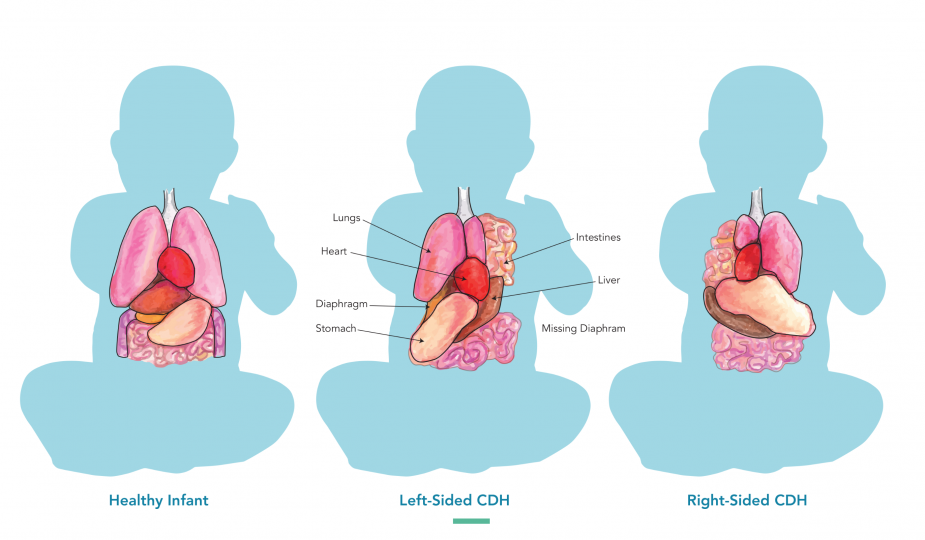
Congenital Diaphragmatic Hernia (CDH) is a birth defect that occurs when a baby’s diaphragm (a thin sheet of muscle that separates the abdomen from the chest) fails to fully form, allowing abdominal organs to enter the chest cavity and prevent lung growth.

CDH occurs in approximately 1 in 2500 births, with over 1600 babies diagnosed each year in the United States alone. There is currently no known cause, but studies have suggested that it is likely due to a number of genetic and environmental factors.

Click here to learn more

Sunday, February 28, 2021

Rare Disease Day

Congenital Diaphragmatic Hernia is a fairly common congenital anomaly but did you know that is also classified as a rare disease?

CDH International has worked with 100’s of other rare disease charities for years to give all of our patients a louder voice.

Please join us this year and wear your stripes to help raise awareness. Please tag us on social media and use the hashtags #rarediseaseday2021, #cdhawareness and #cdhisraretoo

From NORD (the National Organization of Rare Disorders):

Did you know?

  • Any disease, disorder, illness or condition affecting fewer than 200,000 people in the United States is considered rare.
  • There are 7000 rare diseases
  • It’s estimated that (almost 1 in10) have rare diseases.
  • 90% of rare diseases are without an FDA approved treatment.

The purpose of Rare Disease Day is to harness the creativity and energy of the millions of people around the world with rare diseases – and the millions who care about and assist them – to raise awareness and generate action. Together we can accomplish that goal. For inspiration on how to get involved in Rare Disease Day, take a look at the examples of past events.

The zebra is the official symbol of rare diseases in the United States and is noted for its black and white stripes, which are central to its uniqueness. Everyone has his/her own stripes, those characteristics that make each individual distinct. While each of the more than 7,000 rare diseases are unique, there are many commonalities that unite the rare disease community. In the spirit of raising the profile of the rare disease community at large and celebrating Rare Disease Day, this year NORD will promote specific ways that individuals, organizations and groups can show their stripes.

Learn more at NORD’s Web Site.

Also, I learned about the Twitter hashtag #RareDiseaseTruths and shared some tweets.. cried over some tweet that patients shared.

Normally, I would be lobbying for rare disease in Washington DC this week.  Surrounded by other patient advocates from all across the rare disease spectrum and meeting with our Representatives and Senators.

But Covid.

Again.

So today, everything is virtual and I am bopping between 4 different events.   It was very bad planning have all these major events on the same days at the same time.  I hope the community can coordinate better next year as I really don't want to miss anything!

In DC, or with the many rare disease alliances that CDHi belongs to... I represent Congenital Diaphragmatic Hernia.   And we belong to a lot.

But I am also a founding member of the Rare Advocacy Movement (RAM).   I am so proud of this group.   Started just 3 years ago and so many of the advocates have grown so much thanks to the relationships and connections made in the group.  

So since I couldn't with these incredible people today fighting for the patients on the Hill... here are some photos from a few years ago and even a photo of me on the secret, underground Congressional train...


Monday, February 22, 2021

Do The Things That Scare You

Having a sick baby who was not diagnosed before birth is one way to get thrown into the deep end of the trauma pool and be forced to sink or swim.   There was no time for fear, to sit and cry or to even evaluate the situation.

Patient advocates are forced to act on a dime.  In any situation.   Whether it's to get transportation, medication, therapies or insurance coverage, to make a decision on care or to perform a life saving measure... we do what we have to do at the moment it's called for.   Instinctively.   Because we often have no choices.

This taught me to face my fears head on.   

I had to learn how to advocate for my child.

I had to learn to speak up even when intimidated.

I had to share my opinion, thoughts, wishes and what I knew what was best for my son.   Despite often being the least educated person in the room full of doctors.

When I "decided" to start a charity, I again had to overcome a lot of fear.  I say "decided" because any truly dedicated charity leader will tell you that it's a calling, not a decision.  We don't feel like we had any say so really in the matter.

I had to overcome the feelings of not being good enough, educated enough, old enough, experienced enough.   

Just like I had to overcome fear when my son was born, I had to overcome fear when my charity was born... because someone had to take charge and no one else was.  

To my surprise.. I actually figured out how to do the things that I needed to learn how to do.   

I learned how to do CPR. 

I learned how to clean a ventilator.

I learned how to insert an NG feeding tube.

I can suction out and change a trach. 

I learned how to transport a kid on life support.

I learned how to do those things because I had to overcome my fear.   I didn't have a choice if I wanted my son to live.

I also learned how to incorporate an entity in my state.

I learned to file annual tax returns for a nonprofit.

I learned how to code a web site.

I learned how to start a patient registry and all the privacy laws in all the countries we work in.

I learned how to create our logos and our publications.

I learned how to code a phone App.

I moved overseas for months to set up NGOs.

I argued with medical professionals to open doors to allow patient advocates a seat at the table.  

I learned how to write legislation.

I learned how to write books.

I learned a lot.  All the time.  I still am.

I overcame my fear and insecurities and pushed through to keep the charity moving forward.

The funny thing about overcoming your fears is that eventually you become fearless.

Once, I was too shy and afraid to question my child's doctor when I knew he was lying to me about a piece of medical equipment to try to brush me off.     

20 years later, we speak at the same medical conferences and I can shake his hand as a peer and collaborate with him to help other kids.  

Once, I was so scared to speak publicly that my teeth chattered when I got up in front of an audience and my eyes never left my speech because I was too afraid to look up.   

Now, I give speeches without actual written speeches.  I sometimes do this on national television or in front of crowds of 1000's of people.  And people pay me to do this!   

The first time that I traveled alone, I was so afraid of missing my flight, losing my ticket, doing something wrong... that I did not sleep for 2 days before my trip.   

Last year, I was stranded alone in a country in Africa without any government or banks and no money in my pocket for 3 days.   I shrugged my shoulders and I figured it out.  I had a blast and I never went hungry or without shelter. 

Once, I was so afraid of heights, that even seeing someone else lean over a rail would give me an anxiety attack.   

Now, I'm working on my pilot's license.  Slowly, but I will eventually get there.   I've learned how to land and to get out of stalls... and I wasn't even afraid.

The key to overcoming fear is to just keep stepping forward until you can fly.


What is Rare Disease Day?

Rare Disease Day is almost here! Rare Disease Day is an annual international observance held on the last day of February (February 28th or 2...